 Listicle
Natural Hair Growth Oils for Thinning Hair: What Works
Last Updated: November 24, 2026
Quick Summary
Natural hair growth oils mainly condition the scalp and hair shaft, reducing breakage and making hair look fuller, but they do not reverse hereditary or medical thinning. Rosemary oil has the most encouraging early research, though evidence remains limited. Visible density changes, if any, typically take three to six months of consistent use.
- Rosemary oil has the most encouraging early research among botanicals discussed for thinning, though studies are small and short.
- Most oils mainly condition the scalp and shaft rather than regrow hair follicles.
- Visible density changes typically take three to six months of consistent use, and many people see none.
- Oily scalps do best with a pre-wash oil treatment once a week, left on 30 to 60 minutes.
- Sudden thinning, bald patches or scalp pain should be evaluated by a doctor or dermatologist.
Table of Contents
- What Natural Hair Growth Oils Can and Cannot Do for Thinning Hair
- Evidence Quality and Realistic Expectations for Each Oil
- Rosemary Oil for Thinning Hair: Our Rosemary Hair and Scalp Oil
- Clove and Black Seed Scalp Oil for Dryness and Shedding
- Ayurvedic Herbal Oil and Chebe Powder for Thicker-Looking Hair
- Fenugreek and Alma Hair Butter and Strengthening Tonic for Breakage
- How to Use Hair Oil for Scalp Health Without Weighing Hair Down
- Natural Hair Growth Oils for Thinning Homemade: Safe Blends and Patch Testing
- How Long Does It Take to See Results From Hair Oils?
- When Thinning Hair Needs a Doctor's Evaluation and Your Next Step
- Frequently Asked Questions
What Natural Hair Growth Oils Can and Cannot Do for Thinning Hair
Hair growth oils are a popular first step for people noticing thinning. But oils mostly condition the scalp and hair shaft. They do not reverse hereditary or medical thinning on their own. Knowing that difference shapes every choice that follows.
Many people reach for an oil hoping it will regrow lost density. A more realistic goal is a healthier scalp, less breakage and hair that looks fuller because each strand is stronger. Judge any hair oil by those outcomes, not by bold growth promises.
Evidence Quality and Realistic Expectations for Each Oil
Most oils marketed for thinning hair have far less clinical testing than the internet suggests. A useful way to read the evidence is to separate three tiers: human clinical trials, laboratory and animal findings, and traditional or anecdotal use. Most oils sit in the second or third tier, and even the best-studied ones are usually tested as adjuncts to scalp care rather than as stand-alone regrowth treatments.
Rosemary oil (Rosmarinus officinalis) has some of the more encouraging early research among botanicals discussed for thinning, though the studies are small and short, so the evidence is best described as promising but not definitive.
Peppermint oil has laboratory evidence showing it can promote blood flow in animal skin models, but human trials for hair growth are scarce. Treat it as a cooling, stimulating scalp ingredient rather than a proven regrowth agent. Castor oil is rich in ricinoleic acid and is widely used for shine and scalp conditioning, but controlled human data on hair density is essentially absent; its main benefit is reducing breakage by coating the shaft. Jojoba and coconut oils are carrier oils: they condition the scalp and shaft, and coconut oil in particular has laboratory support for reducing protein loss from hair during washing, which matters for breakage but not for follicle regrowth.
Black seed oil, clove, fenugreek, alma, and chebe powder appear mostly in traditional and anecdotal accounts. Some small studies exist for black seed and fenugreek, but they are limited in size and design. None of these should be presented as proven regrowth treatments. A realistic expectation is that a well-formulated oil improves scalp comfort, reduces flaking and itch, and makes hair feel stronger and look fuller because each strand is less brittle. Visible changes in density, if they happen at all, typically take three to six months of consistent use, and many people will see no density change.
Watch out: a product that promises regrowth in weeks is overselling; no topical oil has that evidence base.
Rosemary Oil for Thinning Hair: Our Rosemary Hair and Scalp Oil
Rosemary is the oil most people ask about for thinning, and our Rosemary Hair and Scalp Oil is infused with rosemary extract in a grapeseed oil base alongside hemp seed and argan oil. It is priced at $16.99. The formula is lightweight, which suits fine hair that weighs down easily.
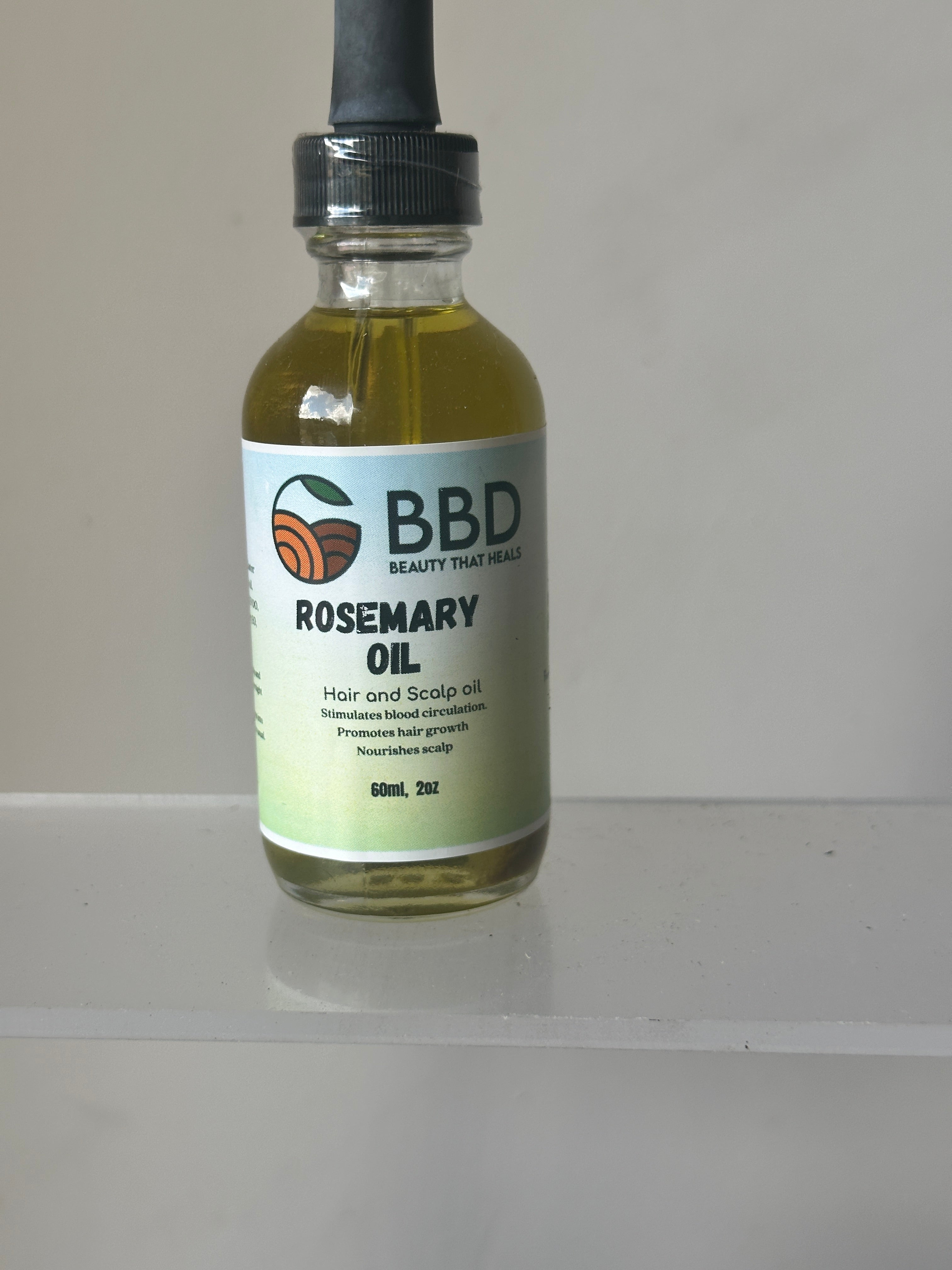
Apply it a few drops at a time, massage in circular motions, and rinse if you prefer a lighter feel.
Product prices in the article
Clove and Black Seed Scalp Oil for Dryness and Shedding
If dryness and shedding are your main concerns, our Clove Hair and Scalp Oil combines clove-infused grapeseed oil, black seed oil, safflower oil and coconut oil for $17.99.
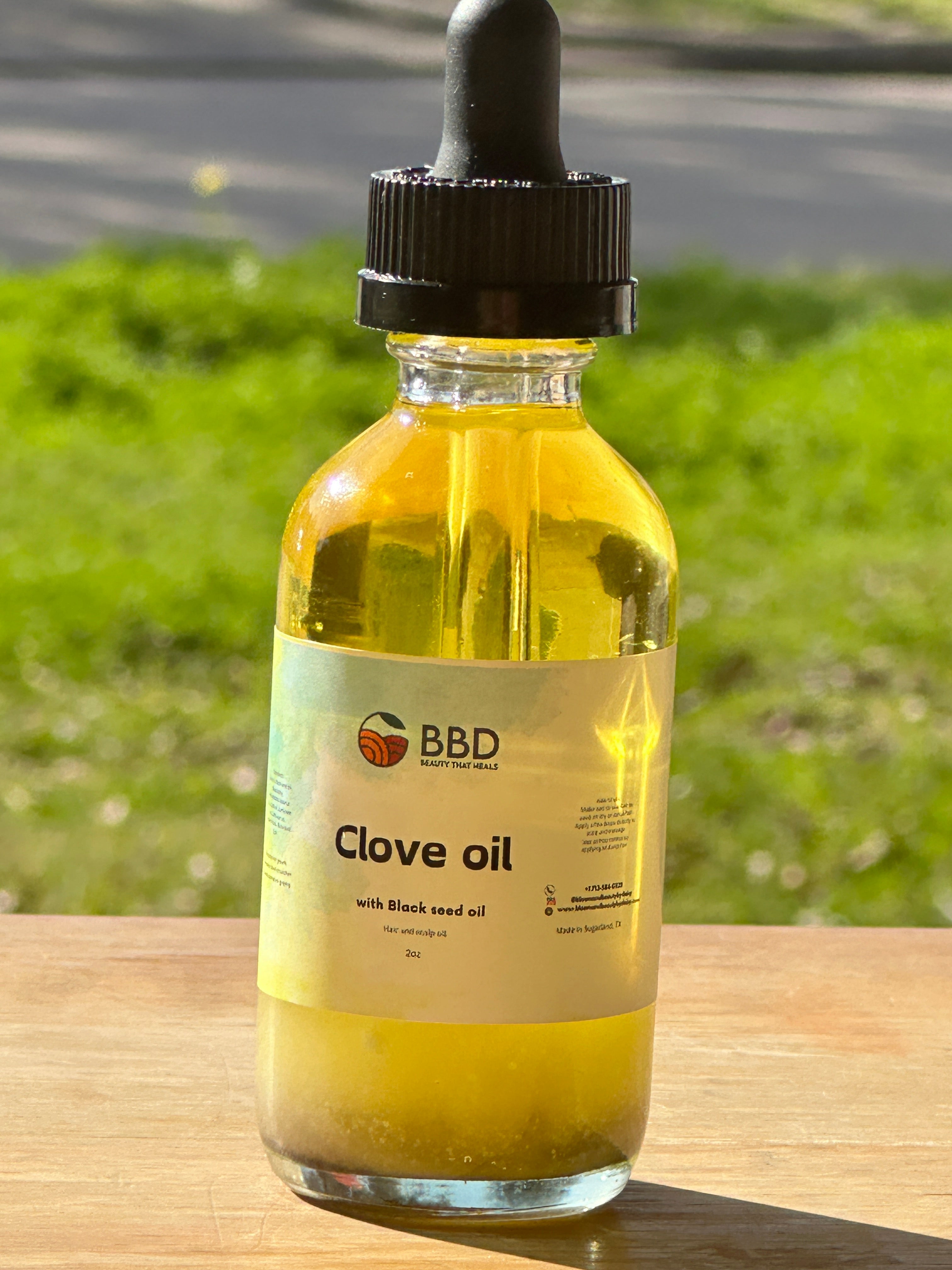
Shedding has many causes, and a scalp oil cannot address all of them. If shedding is sudden or heavy, see a clinician before relying on any topical product.
Ayurvedic Herbal Oil and Chebe Powder for Thicker-Looking Hair
Our Ayurvedic Hair and Scalp Oil, priced at $19.99, blends Indian Ayurvedic herbs, fenugreek, alma, chebe powder, avocado oil and tea tree essential oil. It is the most elaborate formula in the range, and the blend is designed to leave hair looking thicker and more resilient.
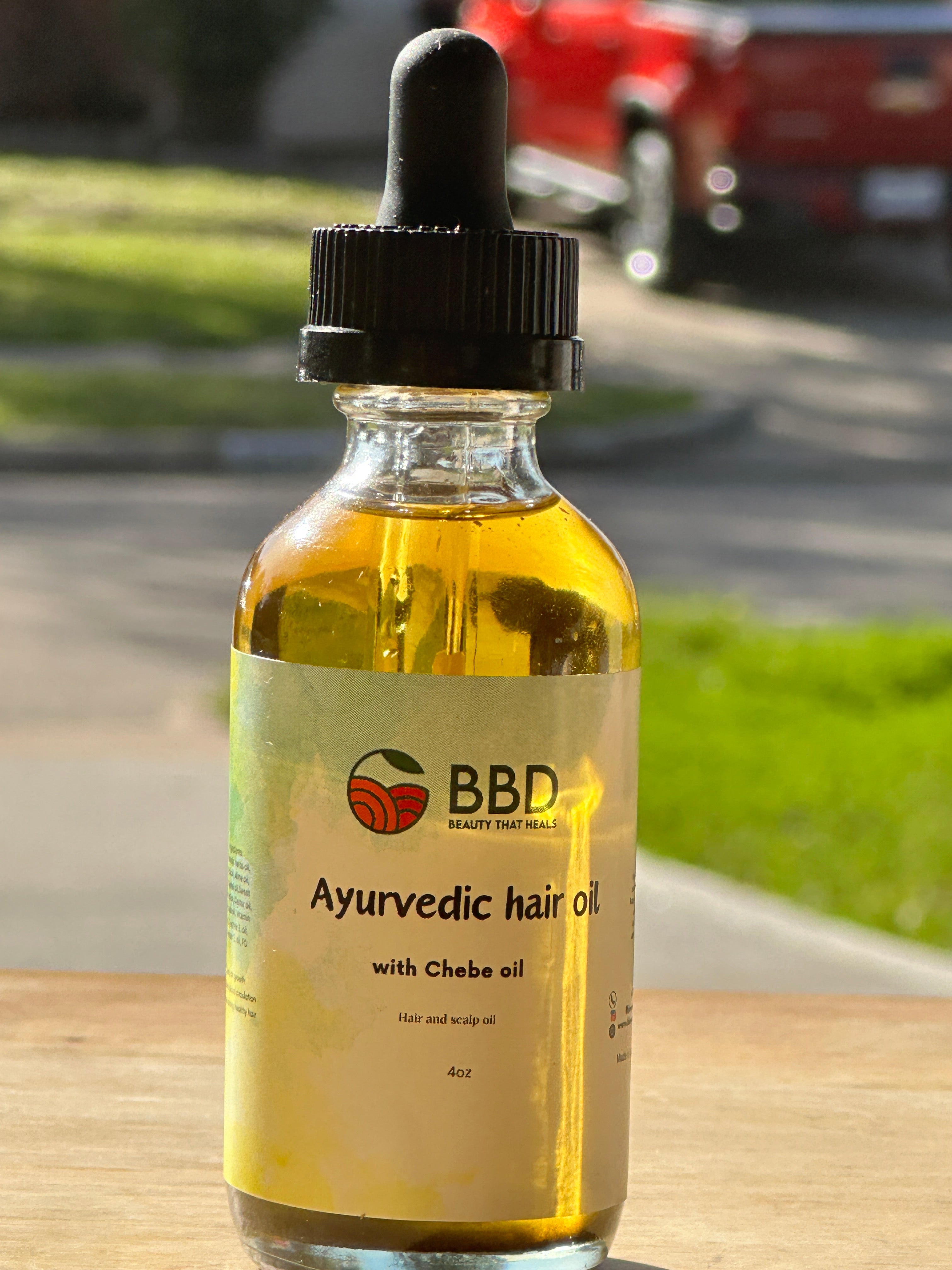
Because it contains tea tree essential oil, do a patch test before full use, especially if your scalp is sensitive. Use it as a deep treatment by covering hair with a shower cap for 30 minutes or overnight if you want a richer application.
Fenugreek and Alma Hair Butter and Strengthening Tonic for Breakage
For breakage, two products stand out. Our Fenugreek Alma Hair Butter, at $27.99, contains kokum, avocado and shea butters with castor oil, fenugreek and alma. Warm a small amount between your palms and work it from the ends toward the roots, avoiding the scalp to prevent greasiness.
Our Strengthening Hair Tonic, at $26.99, is a rice water, ginger, clove and rosemary tonic applied directly to the scalp. It needs no rinse.
How to Use Hair Oil for Scalp Health Without Weighing Hair Down
Application technique matters more than which oil you choose, especially when hair is already thin. The goal is to get oil to the scalp without saturating the roots, and to match frequency to your scalp type and thinning pattern. For a companion guide, see using rosemary hair oil without greasy roots.
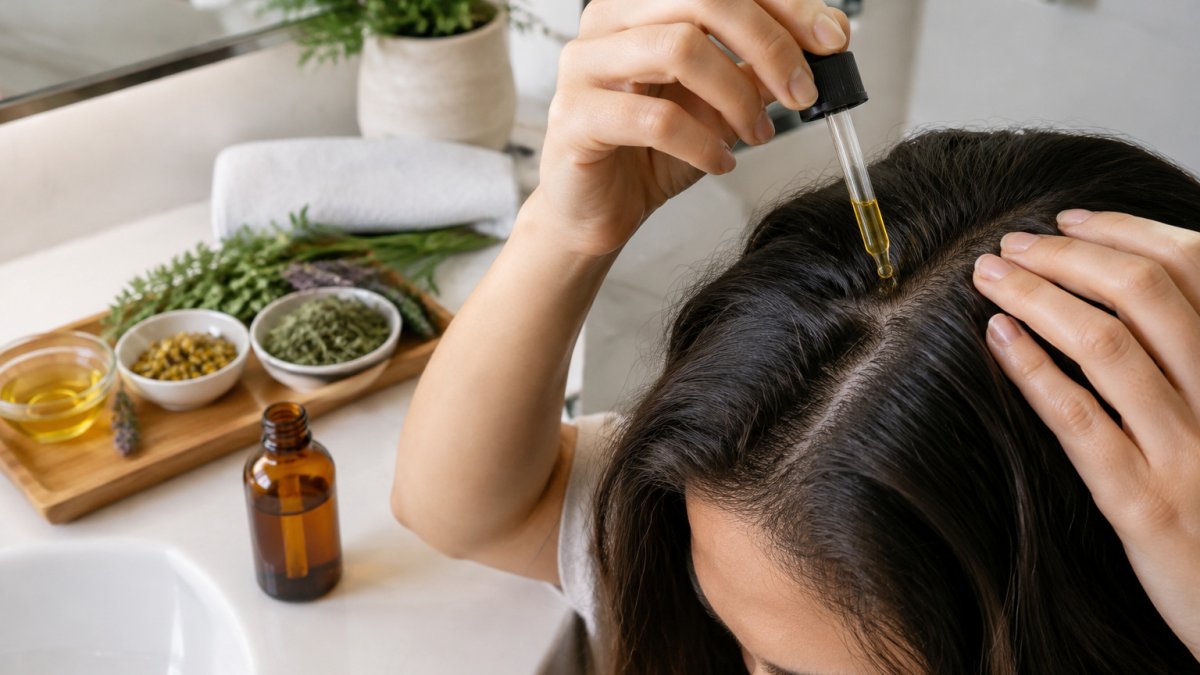
Start with dry or barely damp hair, not soaking wet hair, because water dilutes the oil and encourages you to use more. Part hair in sections about an inch apart and apply two to three drops along each part line, then massage with fingertips, not nails, for two to three minutes. For fine hair, use a lighter carrier such as grapeseed or jojoba and keep the oil off the mid-lengths and ends unless they are dry. For coarse or curly hair, a richer oil or butter can be worked from mid-length to ends, with a lighter scalp oil reserved for the roots.
Frequency depends on your scalp. Oily scalps do best with a pre-wash treatment once a week, left on for 30 to 60 minutes before shampooing. Dry or flaky scalps can tolerate two sessions a week, and a few people with very dry scalps leave oil on overnight under a shower cap. If you have seborrheic dermatitis or a sensitive scalp, keep sessions short and wash out thoroughly, because leaving oil on an irritated scalp can worsen flaking.
Wash-out is where most routines fail. Use a gentle shampoo and shampoo twice on oil days: the first pass lifts the oil, the second cleans the scalp. If roots still look limp, you used too much oil or left it on too long, not that oil is wrong for you.
Track outcomes separately, because they are different things. Shedding is hair that comes out at the root; breakage is hair that snaps along the shaft; density is how much scalp is visible. Count hairs on your brush or in the shower drain once a week, note breakage on your pillowcase, and take a photo in the same light and position every four weeks.
Watch out: applying a heavy butter or oil to a freshly oiled scalp every day is the fastest way to limp, greasy roots and an itchy scalp.
The table below sums up the scalp routine and the frequency each scalp type can handle.
| Scalp type | Oil frequency | Key step |
|---|---|---|
| Oily scalp | Once a week | Pre-wash, leave on 30 to 60 minutes |
| Dry or flaky scalp | Two sessions a week | Overnight under a shower cap for very dry scalps |
| Seborrheic dermatitis or sensitive | Short sessions | Wash out thoroughly to avoid worsening flaking |
| Fine hair | Oil roots only | Use grapeseed or jojoba, keep off mid-lengths |
| Coarse or curly hair | Mid-length to ends | Richer oil or butter, lighter oil for roots |
Natural Hair Growth Oils for Thinning Homemade: Safe Blends and Patch Testing
Homemade blends are popular, but mixing essential oils without guidance can irritate the scalp. Always dilute essential oils in a carrier oil, and never apply undiluted essential oil to the scalp.
Patch test any new blend on the inner forearm for 24 to 48 hours before applying it to your scalp. If you see redness, itching or burning, stop and rinse.
Our ready-made oils already include diluted essential oils and carrier bases, which removes much of the guesswork.
How Long Does It Take to See Results From Hair Oils?
Expect several weeks of consistent use before you judge a scalp oil.
Track your routine in a simple log, noting how often you oiled, how the scalp felt and how much hair came out in your brush. Visible changes in thickness take months, and some people see no change at all.
When Thinning Hair Needs a Doctor's Evaluation and Your Next Step
Sudden thinning, bald patches, scalp pain, or thinning that keeps progressing despite regular care should be checked by a doctor or dermatologist. Hormonal changes, thyroid problems, nutritional deficiencies and some medications can all cause hair loss, and a scalp oil will not treat those causes.
Our advice is simple: use a gentle oil to support your scalp, and get a professional evaluation if thinning continues. Start with the Rosemary Hair and Scalp Oil at $16.99 if you want a lightweight place to begin, or see the Ayurvedic Hair and Scalp Oil at $19.99 for a richer treatment.
Frequently Asked Questions
What is the best natural oil for thinning hair?
No single oil has strong clinical evidence for regrowing thinning hair. Rosemary oil has the most discussion around hair growth, and the Rosemary Hair and Scalp Oil from Bloom and Beauty by Daisy ($16.99) is formulated with rosemary-infused grapeseed oil, hemp seed oil and argan oil. Choose an oil for the scalp condition you have, such as dryness or itch, and expect supportive care rather than dramatic regrowth. If thinning is sudden or patchy, a clinician should evaluate it first.
Can natural oils help hair grow back?
Natural oils can condition the scalp and hair and may make existing strands look fuller, but they do not reliably reverse hair loss from genetic or medical causes. Oils like the Clove Hair and Scalp Oil ($17.99) are positioned to support scalp health and healthy hair growth. Treat them as one part of a routine, and use them alongside any treatment a doctor recommends.
How long does it take to see results from hair oils?
Most people need consistent use for several months before noticing changes in shedding, breakage or density, since hair grows roughly half an inch per month. Reduced breakage often shows up first, while new growth takes longer to see. Track results with photos taken in the same light every few weeks, and stop or see a clinician if thinning continues or worsens.